Why Are We So Obsessed With Elizabeth Holmes?
Published: October 27, 2026
last updated: November 5, 2026

RACHAEL KAY ALBERS is a brand strategist + creative director for businesses that burn the rulebook. She writes at the intersection of personal branding, pop culture, history, and identity.

My office is a mess. It looks like a crime scene. A moment interrupted. What’s the story?
As I type this, I struggle to keep my eyes on the screen, distracted by mops of hair — my wig collection scattered across the floor. I can count at least a dozen. Carrie Bradshaw. Vivian Ward. Jessie Spano. My mom.
I made this mess, searching frantically for those oh-so-familiar locks in time for a film screening of You Can See Everything last week. (How can I tell Liz from all the other ladies who lunch in my costume closet? The Elizabeth Holmes wig is light blond but has visible roots. NO OMBRÉ, NO DICE.) Just a few days ago I was chucking boxes around my basement in a mad dash to the theater so I could CREATE TIMELY CONTENT, OKAY?!? (**pants in zeitgeist**)
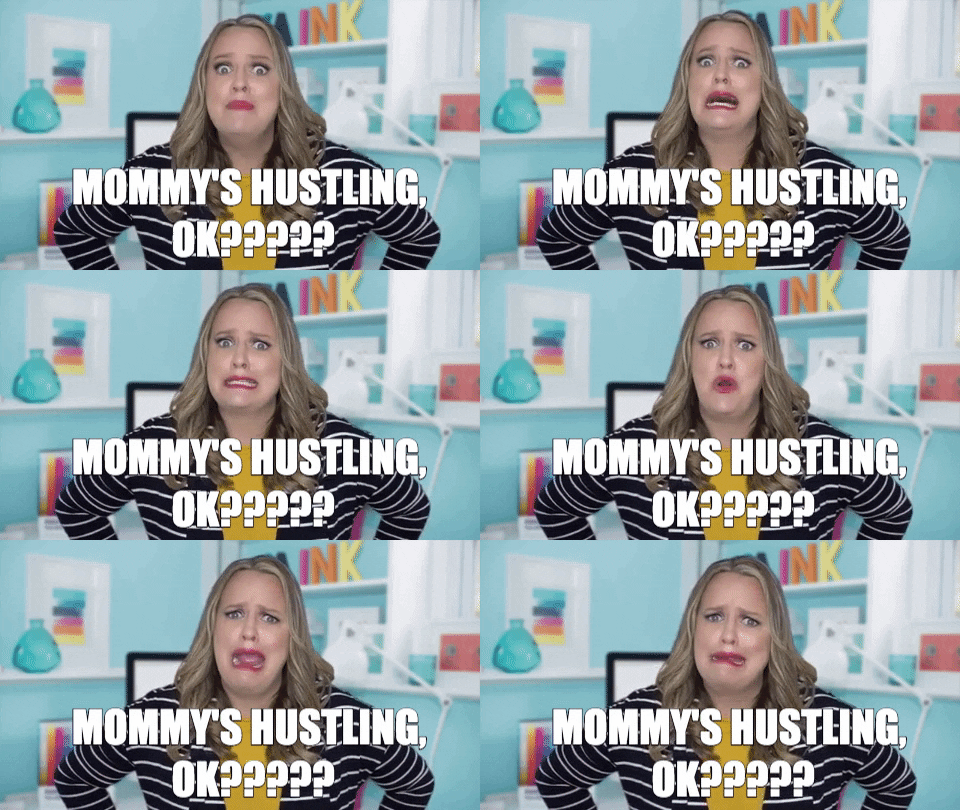
Once upon a time, Liz and I both dressed up and exaggerated for a living — I hosted a business sketch comedy show where I made fun of the marketing industry, she ran a health tech startup where she made it look like her technology worked. Both of us were just kidding.
I even parodied Liz in a legendary episode of Awkward Marketing connecting her to the grifters of online business. Which explains why I’ve still got her turtleneck in my closet.
Now I’m knee deep in wigs and white knuckling my keyboard because I can’t clean up this crime scene until I write you. I’ve been procrastinating enough as it is.
Bizzybeth Holmes is back onscreen and so am I.
The documentary You Can See Everything released October 16 and I was wigged up by Wednesday.
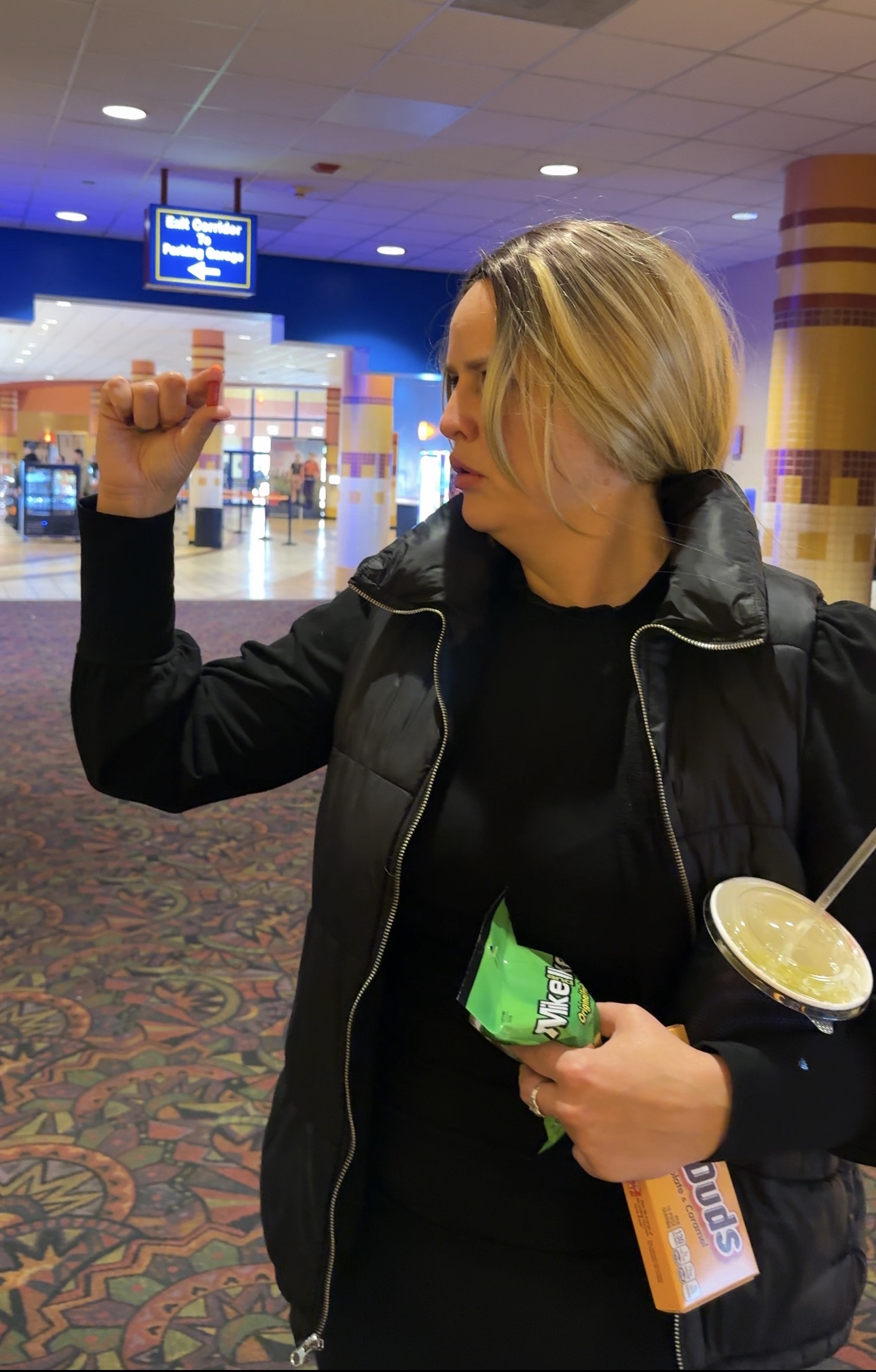
I went twice in 48 hours.
I scribbled 20+ pages of notes in the dark.
I cried.
And now I’m here. In your inbox. Back onscreen. Talking about scammers and snake oil saleswomen. And asking myself why.
Why do we keep coming back to stories like Elizabeth Holmes?
Why was a 10:45 AM Wednesday showing of this 3-hour documentary packed full?
Why did I go back two days later, pen in hand, to scribble 10 more pages of notes in the dark?
Is it, as I wrote in my essay on Anna Delvey in 2022 “our cultural glorification of the fake-it-til-you-make-it American dream? Or our macabre appetite for crime that Netflix feeds just as shamelessly as [Anna Delvey] skipped bills?”
Do we want the catharsis of seeing a con artist answer for her crimes?
Is there an irresistible warmth around the fire, watching this woman burn?
In Act II of You Can See Everything, we sit before a vivid yellow crackling hearth, where Nathan Fielder is perched fireside with Amanda Seyfried: the two talking in near whispers about who Elizabeth Holmes really is.
You don’t need to see the movie or even know all of the details of the players to appreciate this moment. Let me set the scene.
In Act I of You Can See Everything, we watch Elizabeth in her final days before prison.
Nathan Fielder and the documentary crew move into the home she’s renting. “FYI you can see everything,” she writes to Nathan via text. The title of the film isn’t as much a promise to us as it is a reference to Elizabeth’s promise to the man making a movie about her.
In Act II, we watch other people watch Act I.
Principally her partner and her performer: Billy Evans and Amanda Seyfried, respectively. (And Nathan, of course.) We watch them watch her. Pontificate about her. Wring their hands over who knows her best.
Who has the biggest say about what Elizabeth would have to say?
Who has the claim to the fortune from her misfortunes?
Who owns Elizabeth’s image and does it come with a license for her culpability, too?
Then, Fielder brings Seyfried back to the San Diego cottage that Holmes had rented before her prison sentence. And we watch a fever dream sequence of Seyfried in fictional re-enactments of all the moments Fielder was unable (or unwilling) to capture on camera.
The lines are blurred between Elizabeth and Amanda, truth and fiction, reality and illusion; in Act II when Nathan and Amanda sit by the fire and talk about Elizabeth, it would be easy to confuse Amanda for Elizabeth.
This is, after all, the familiar yellow glow of the scene from Act I where Nathan sidles up to Liz on the couch to watch the iconic comedy sketch “Who’s on first?” And Elizabeth tearfully, fearfully explains why she doesn’t get the joke.
Fielder and Seyfried sit in this same golden glow to discuss Holmes, as if they’re still investigating an active case.
If we’re not careful, we’d think we were here to investigate, too.
The audience does play a key role in You Can See Everything. But we’re not here to play detective.
When I first saw the film, I focused my gaze on Billy, as the filmmakers asked me to. Act I and Act II both open with close ups on his face, after all. Talking on the phone. Shooting a gun. Billy the bad guy.
Then, when I went back for a second viewing, I was sure I had been had and Billy was a red herring. I went back again, this time looking for Liz.
Act II is full of reflections — mirrored reflections of people in windows, panes of glass, screens reflected on screens.
Soften your gaze and you’ll let Liz out of sight long enough to see yourself reflected back here.
This is what we’re here to see. This movie is like a Magic Eye. Once you relax into it, the real shape of the story starts to emerge.
And it’s not about Elizabeth Holmes.
It’s about you.
And me.
And how we see and unsee each other, the aperture of the algorithm…the attention economy…the age of the personal brand…collapsing us into fragments of ourselves.
We consume each other and the world around us, in scenes and snapshots, reels and clips.
We don’t know who or what to believe. And that’s precisely the point.
In You Can See Everything, disbelief is a business.
In the age of the personal brand, “we are all simultaneously scam artists and sleuths, cropping our lives and careers online for public consumption while at the same time becoming increasingly skeptical that the stories our feeds tell us are anything more than fiction.”
Our appetite for stories like Liz’s is part and parcel of a culture where suspicion sells.
We are all gasping for air and attention in a crowded marketplace that constantly asks us, “Do you buy what I’m selling?”
Do you trust me?
Can I trust you?
Are you selling me a song?
Do you have an agenda?
Who do you work for?
What do you know?
Are you telling me the truth, the whole truth, and nothing but the truth?
Help me, God.
These questions keep us clicking. Scrolling. Buying movie tickets. Scribbling furiously in the dark. Pleading with each other to listen to our theories on the case.
Today it’s Elizabeth Holmes.
Tomorrow it’s Elizabeth Holmes.
There will always be another Elizabeth Holmes.
And it is that knowledge that keeps us circling each other, like sharks in the water. Hunting for our next criminal to expose, eager for our own pound of flesh.
Tim Snyder describes this as the perfect conditions for sadopopulism — a state where we fear each other, blame one another for our collective problems, and thus mutually tolerate one another’s suffering. This keeps the very power structure that is responsible for our collective suffering intact. And the very people that could resist and revolutionize this power structure are instead alienated and terrified of one another.
We don’t trust our community leaders or our community members.
We don’t trust the general store or the attorney general.
We don’t trust artificial intelligence or our actual intelligence.
Soon, the moral compass of black and white looks sickly grey.
We don’t know up from down.
Right from wrong.
Who’s on first?
And it is in this state, where it’s hard to know who or what to trust, that we are so easy to manipulate. To convince, to campaign, to canvas — away from each other and towards cruelty.
If disbelief is a business, certainty is a commodity and we will scramble for any semblance of it. Even and especially if it comes in the form of pointing our fingers, our cameras, our guns away from ourselves.
A collective culture of fear turns us into islands of one.
Everyone else is the bad guy. Trust no one. Always be looking over your shoulder because someone is watching, ready to get you.
We consume each other voraciously, with a desperate and hungry desire to find each other out. We circle one another, surveilling, scrutinizing, convinced we’re onto something. That if we just keep looking, we’ll crack the case.
But this hamster wheel of endless suspicion merely keeps us busy. We think we’re outrunning each other, but we’re really powering the machine.
So busy surveilling each other, thinking we’ve caught a thief — all this time, we are robbed of nuance, robbed of our humanity, robbed of the revolution we’d be planning, if we weren’t always trying to bust each other’s doors down.
It feels cozy and comforting to sit fireside with our popcorn, thinking we have Elizabeth Holmes in our clutches, watching her burn, and agreeing on one thing — that we got the bad guy and we are now safe from her.
Not so fast, Fielder reveals.
The call is coming from inside the culture.
Are we really safe in a system that conflates storytelling with science?
Where victims are invisible and villains get documentaries and Hulu series?
Where the people hurt the worst are faceless and the ones responsible can simply rent the face of a Hollywood starlet to re-litigate the case in the court of public opinion?
Where we go onto say, “Well, if Holmes were a man, she’d be a Musk, but instead she’s in prison,” like some sort of gotcha.
As if that doesn’t reveal the true horror — that Holmes is the least of our problems.
That we, like Elizabeth, are in a kind of prison. Trapped out here in the real world with all the monsters skating by, wearing the wigs and costumes of success.
But this isn’t a scary movie. It’s real life. And though we’re right to be afraid, we’re looking in the wrong direction.
We must look up from Liz long enough to see ourselves — our system — reflected in this story. And then step into the plot as active participants in what happens next.
Don’t be so sure we’ve cracked the case.
We aren’t here to experience catharsis, we’re here to be galvanized.
This film shatters the fourth wall and allows us to see how we form part of machinery that makes Elizabeth Holmes’ fraud and the end times fascism she rode in on possible.
That feeling will make you scribble furiously in the dark. Stick with it. Lean in towards the questions, away from the catharsis and easy answers.
Take this inquietude to the polls. To your city council and coalition meetings. To your book clubs and community groups. To the conversations you have with friends.
Towards a spectrum of many possible truths and away from the black and white of “good and evil.”
Where “we are investigating the bandwidth of our ability to hold multiple truths at the same time,” to quote Jenna Zaffino, who joins me on the You Can See Everything episode of Marketing Muckraking.
If disbelief is a business and certainty is a commodity, a fierce commitment to nuance is a form of resistance. I like to imagine myself grabbing ahold of this nuance as part of what I call “the rainbow handlebars of hope.”
Catharsis will make you sit back in your seat. The villain gets caught. The credits roll. You feel relieved. Your work here is done. Don’t confuse that warm fuzzy feeling with hope.
Hope is what allows you to lean forward, break the fourth wall, and write your part of the story, even if you don’t know how it’s going to end. Because once you’ve seen everything, you can’t unsee it.
Grab the handlebars. This is an unfolding story. It might get bumpy. But we’re in this together and you’re not an island of one.
Wigs optional. Sense of humor highly recommended.

May I interest you in another rabbit hole?

Shake that body of work
Essays + experiments + ideas I’m thinking about in public.
Need a creative director?
Brand strategy + creative direction for your next big act.