You Can See Everything
Published: October 25, 2026
last updated: November 5, 2026

MARKETING MUCKRAKING is the ethics + entrepreneurship podcast for rebels, revolutionaries, and renegades who run businesses that burn the rulebook.

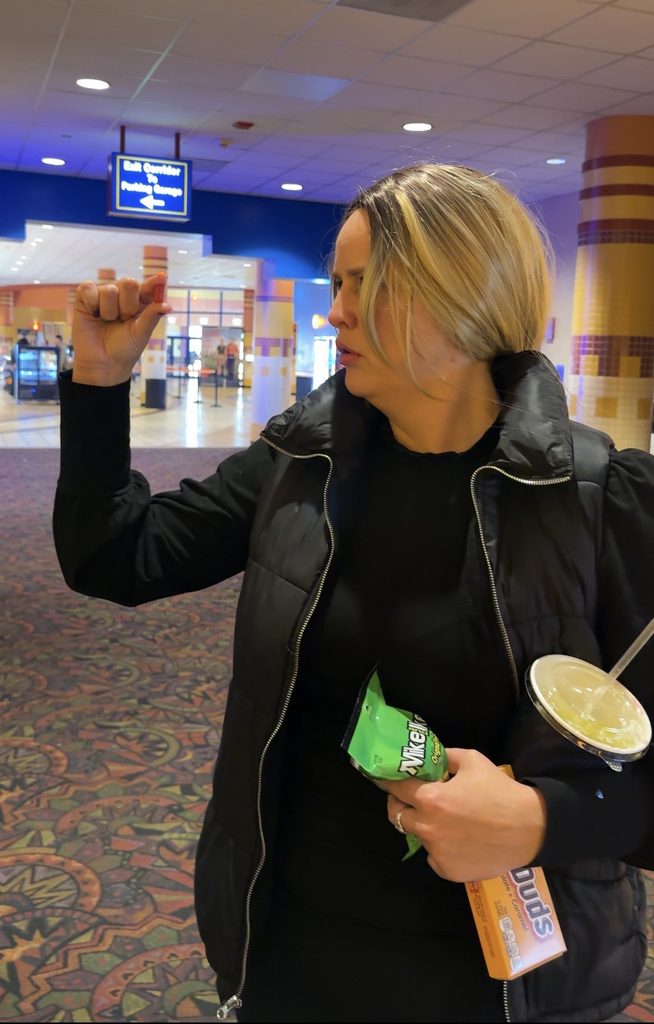
Welcome back to Marketing Muckraking! It’s been a while but let’s not make it weird 😉 Elizabeth Holmes — the personal brand, the snake oil saleswoman, the legend — brought me back. Years ago, I donned an Elizabeth Holmes wig for an Awkward Marketing parody connecting Liz with the fake-it-’til-you-make-it funnel hackers and grifters that partially inspired this podcast to begin with. So when You Can See Everything came out, I had to don that wig again, head to the theater, and see everything for myself (twice!) More about that in this episode.
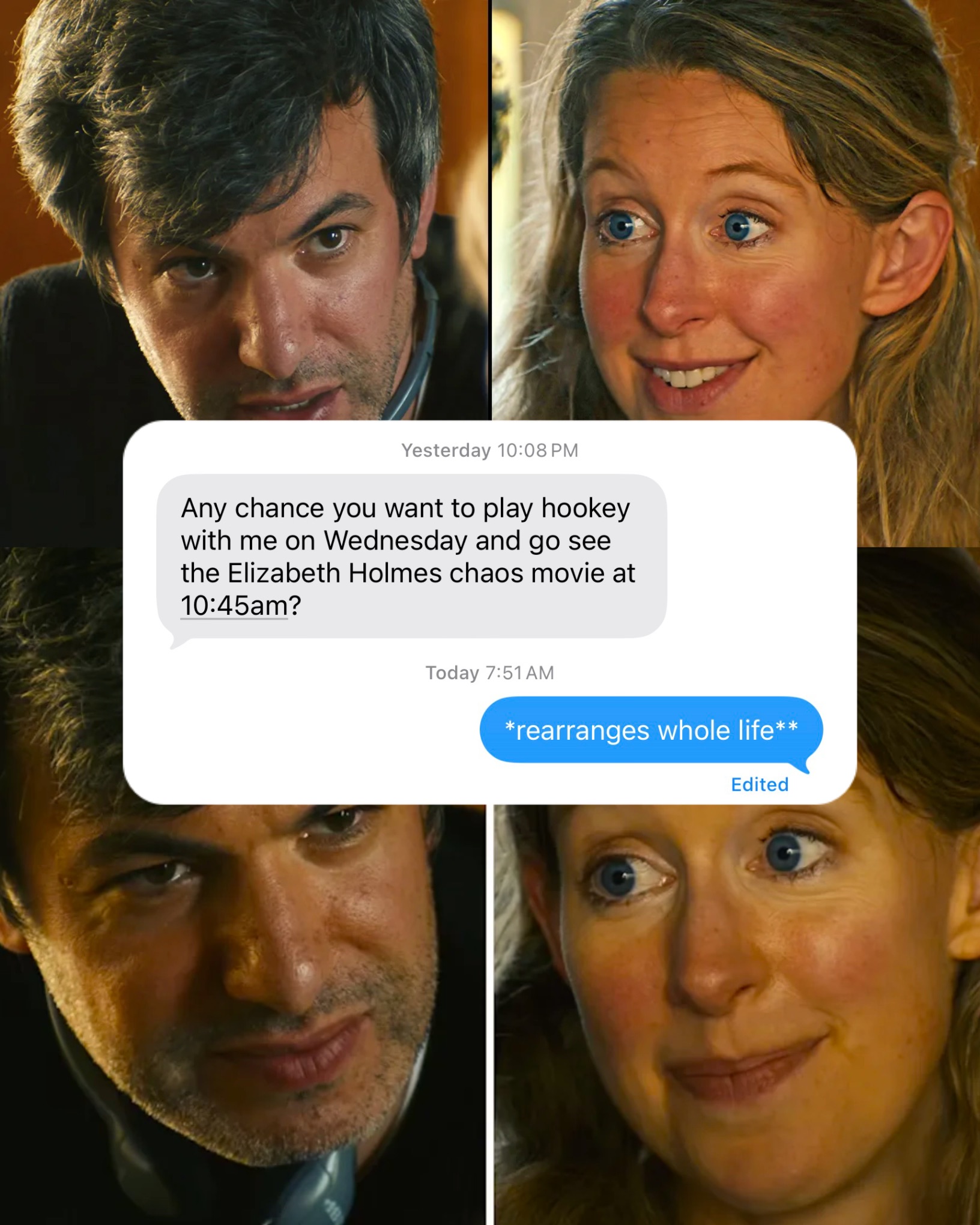
Today’s adventure begins with a late night text message from our guest:
And the rest is history! Come a long for a wild ride through the Elizabeth Holmes chaos movie that is most definitely not about Elizabeth Holmes.
Our analysis of You Can See Everything frames the film in two acts.
Act I opens with Billy talking about Elizabeth over the phone to an unidentified male voice, explaining why “they” chose to do the film. When the camera zooms out, we see that Elizabeth was behind him all along.
Act II opens with Billy shooting a gun, talking about Elizabeth. We do not see Elizabeth alive again until the final seconds of the film.
What follows has all the hallmarks of a true crime investigation — including the cheesy, dramatic re-enactments and the opinionated talking heads who have no connection to the case, behaving like authorities and telling us how to feel about it.
Whodunnit? The call is coming from inside the critical response.
On today’s You Can See Everything episode, we have some questions:
- What happens when a 40-something biz comedian shows up to a Regal Cinema at 10:45 AM on a Wednesday dressed as Elizabeth Holmes
- The red (hatted) herring in You Can See Everything and why is Billy Evans as the bad guy the way-too-obvious pick?
- “They didn’t have a Keurig but they could make a hologram of her face so that she could talk to people after that she went to prison?! Make it make sense.” Jenna can’t understand why Liz’s 70s-wood-paneled upside-down universe has no Nespresso.
- The real missing persons in the case of the unrepentant tycoon-turned-tradwife, i.e. where have all the victims gone???
- “Should we set up a GoFundMe to save her!?” and other questions Nathan Fielder wants us to ask about our dams-Elizabeth-in-distress and the narcissist she rode in on
- How many mansplainers does it take to get to the center of Elizabeth Holmes? The jury is still out.
- Is Amanda Seyfreid an AI hallucination or are we just happy to see her?
- And, finally, why Liz is banned from laser tag — forever!!! No exceptions!!! Don’t like it? Take it up with (what appears to be) her mother!
About Jenna Zaffino
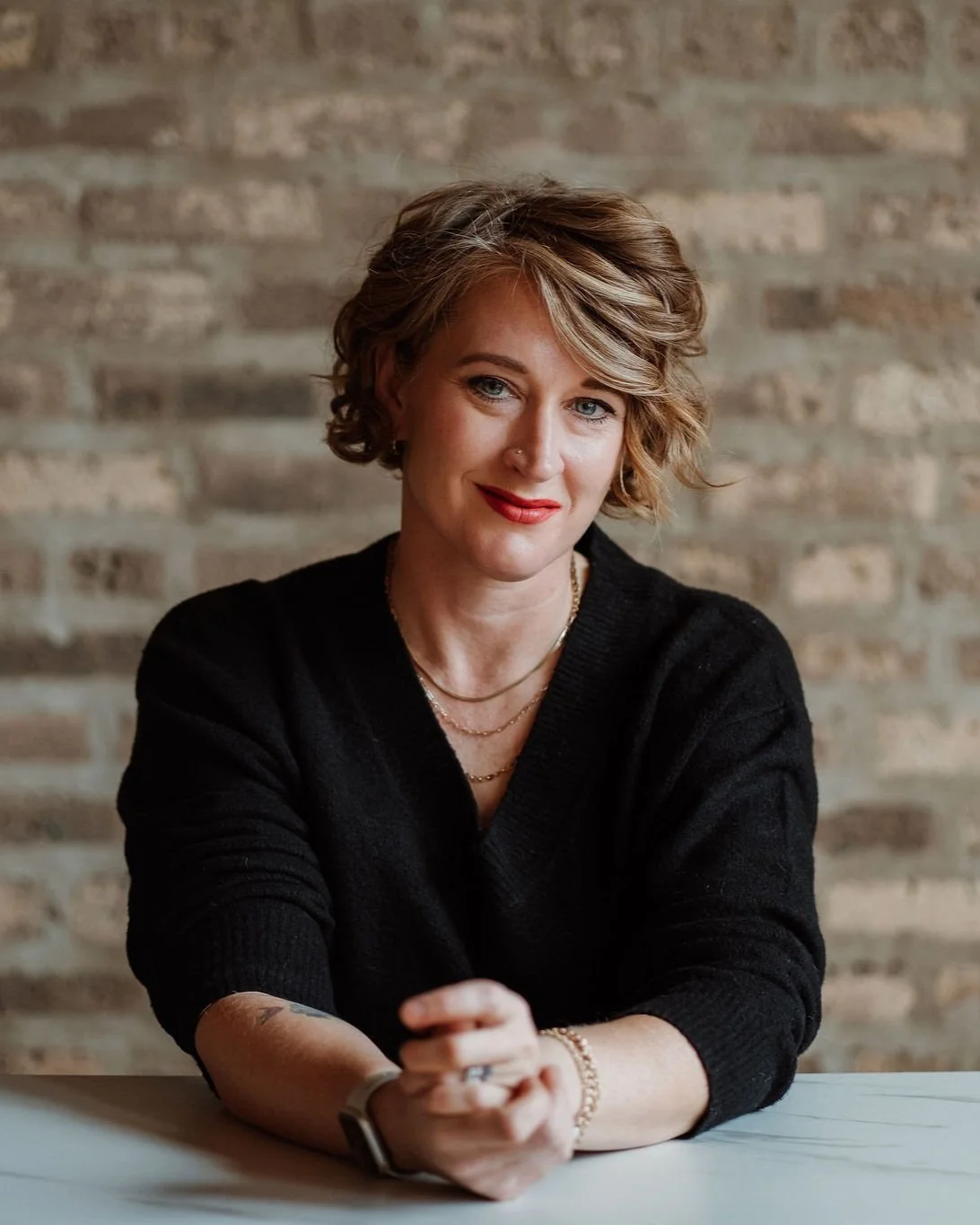
Jenna Zaffino is a Board-Certified Health Coach, Corporate Wellness Specialist, keynote speaker, and experienced movement professional who helps people Live Well, Despite Limits. Through engaging keynotes and interactive workshops, she combines practical stress education, body-based practices, and guided reflection to help people navigate change, support recovery, and stay connected to what matters. Jenna has presented for organizations including the American Lung Association, McDonald’s, Bank of America, and Chicago Fire Football Club. Her approach offers accessible tools for building sustainable well-being while honoring the real demands and limits people face. Jenna is also a leading Pilates expert and she leads those classes in Millennium Park, Chicago every summer — you might recognize me 😉 from showing up to these classes late and tiptoeing barefoot across the grass.
Mentioned in this episode:
- You Can See Everything documentary
- The Dropout series on Hulu
- Adult Braces by Lindy West
- Awkward Marketing parody of Theranos and Elizabeth Holmes
- Ashlen Hilliard, People Leave Cults
p.s. Pics or the wig didn’t happen?
Episode transcript
Rachael Kay Albers: Welcome back to Marketing Muckraking. Thank you for being here, Jenna.
Jenna Zaffino: Thank you for inviting me on this resurgence.
Rachael Kay Albers: Thank you for inviting me. I got a text message a couple of days ago, literally less than a week ago, 10:38 PM.
Jenna Zaffino: Should we read it? Any chance you want to play hooky with me on Wednesday and go see the Elizabeth Holmes chaos movie at 10:45 AM?
Rachael Kay Albers: And I received this and promptly responded: Rearranging my whole life! And then we did it. We made it happen. We moved our meetings. Because this is one of the things I’ve seen online, Jenna, is all of the working parents saying, When am I gonna see this three hour documentary? Where am I gonna get the child care in this economy? Well, you’re gonna have to move your meetings around and go see a ten forty-five AM Wednesday showing, because that’s what Jenna and I had to do.
Jenna Zaffino: Yeah. I lucked out, I had a whole workplace wellness cancel on me, and I was like, Well, looks like the wellness is for me and the friend who would really get excited about this sort of thing, and you were the first person I thought of.
Rachael Kay Albers: I’m like, you rang. I’ve never been. What a compliment. What an honor. And this is the kind of friends we are because we always are perpetually trying to schedule the coffee date, the dinner out. It never happens to happen. But you want to play hooky to watch a three-hour documentary in the middle of the work week. Hell yes. That’s a hell yes.
Jenna Zaffino: That’s the kind of friendships I aim to cultivate in my quickly approaching fifties. So there you go.
Rachael Kay Albers: Mm-hmm. Mm-hmm. Living the dream, both of us. So there we are. It’s Wednesday at 10 45 a.m. And I sneak up behind Jenna dressed as old Liz, dressed in a black turtleneck, puffy vest, and a terrible wig as Elizabeth
Jenna Zaffino: Yeah. The Theranos era.
Rachael Kay Albers: To go in. Because okay, Jenna knew that I was gonna say yes to her indecent proposal because we both have a history of being fascinated with Elizabeth Holmes. Jenna, what brought you into the world o’ Liz?
Jenna Zaffino: So I have a long history in the Pilates world. Not the Pilates world of today, mind you, but the Pilates world of of the beginnings of Pilates, the roots, so to speak. And without going into that could be a three hour podcast unto itself, but there was a moment in which I thought, and I quote, this shit is crazy. I have to get out of here. And in order to heal my mind, body, and soul, I decided to take a step back from the organizations that I was a part of and see if there was a better, more intelligent, more safe way. And part of my exodus from said organizations was first to seek out and interview a cult interventionist. Her name is Ashlen Hilliard, and she usually does work with folks who are leaving high control groups, usually Christian fundamentalist groups, which is a little of our intersection. She’s fascinating.
Rachael Kay Albers: Yeah.
Jenna Zaffino: She’s doing amazing work. So I initially interviewed her to find out like the overlappings between Pilates and cults. And large group awareness trainings and where things could go wrong. And then as I was interviewing her, I realized like, I recognize some of these situations. And I ended up working with her, and I became fascinated by how people in power can walk that very fine line of coercive control, authoritarianism, lots of themes that are coming up today. And in seemingly very caring, very innovative ways, wreak havoc in leave chaos and destruction and tragedy in their wake. And Elizabeth Holmes fit the brief beautifully. So I was wrapped with attention immediately, just in for the entirety of the story, watched and listened to everything about it. And so yes, that was the thing about you dressing up too. I was like, it’s not fandom, but it’s representative of like having been there from the start or been there from the jump somehow. Like I’ve been into this story and we’re gonna talk about, victims of these crimes too later. But we’ve been in it. We’ve been in it, and that’s why we have something to say about it.
Rachael Kay Albers: There is no fandom, right? But there definitely is like I knew Liz when. I’ve been into this band
Jenna Zaffino: No
Rachael Kay Albers: Since before it was cool, but by into this
Jenna Zaffino: Yeah.
Rachael Kay Albers: Band, it’s really on this true crime beat because we haven’t been at idolizing Liz. We’ve been really trying to figure her out. We and
Jenna Zaffino: No. Yeah.
Rachael Kay Albers: She is such a fascinating specimen of everything you just said. People in power, corrosive control, authoritarianism, under the guise of a nurturing, caring, tech future focused, Fill in the blank. so you were learning about cults, high control environments. And then Elizabeth Holmes pops up in the news and you see the watermarks of everything you’re learning all over this case. Is that right? Yeah.
Jenna Zaffino: Mm-hmm. That’s right. That’s right. And the friction of seeing a woman in power in a male dominated space, and
Rachael Kay Albers: Right.
Jenna Zaffino: As a woman, wanting so desperately to support this and be behind it and be excited about a woman innovator in health tech completely let down in that friction between like, is she a huckleberry, a stool pigeon, a scapegoat, or is she the devil incarnate? That that part. Mm-hmm.
Rachael Kay Albers: Yeah. That was definitely the question we all had too was how wait a minute, wait at first it was like, Well, of course you’re gonna come for a woman. A woman
Jenna Zaffino: Yeah.
Rachael Kay Albers: Can’t be a tycoon. Come on.
Jenna Zaffino: Right.
Rachael Kay Albers: So we all were like, wait a minute, hold on, I think because of that, and this is a real oversimplification, there was a backlash, there was an even higher level of scrutiny coming from women towards Elizabeth Holmes being like, wait a minute, you can’t bring us down like this. Like
Jenna Zaffino: Yeah. Because we get pissed. You got there. Like, don’t ruin it.
Rachael Kay Albers: This is gonna ruin the tour. I will say that’s a trope they bring up again and again. Billy in this movie repeats the phrase, we’re gonna get the band back together. He says it several times, and I’m
Jenna Zaffino: Yeah.
Rachael Kay Albers: Like, this is gonna ruin the tour, Liz. You ruined it for all of us. similarly,
Jenna Zaffino: Yeah, yeah.
Rachael Kay Albers: I was on a journey when this all was coming out of being at the early stages of researching, The origins of branding as an institution and the overlaps
Jenna Zaffino: Mm-hmm.
Rachael Kay Albers: Between branding and what ultimately turned into the age of the personal brand and military propaganda and national identity and how we see ourselves individually and collectively as reflected through advertising culture. And now that we’ve arrived at this moment where each of us is encouraged to and is expected to. Interact according to market terms. We are all a personal brand of one. And Elizabeth Holmes is a great example of that. And that this
Jenna Zaffino: Mm-hmm. Mm-hmm.
Rachael Kay Albers: Movie examines who is Elizabeth Holmes. Is she a character that she created, that someone else created, that is being created before our very eyes by her husband or by Nathan Fielder? So I was studying branding. And within branding, you talk about high control environments and coercive control authoritarianism. also studying this kind of profile of the entrepreneur, snake oil salesman/slashwoman, and kind of embedded in brand history and the whole fake it till you make it nature of American culture and American business culture. Because when you look back throughout the last 150 years of our myth as an culture and as a nation, so much of the success stories that we like to hang our hats on, a lot of
Jenna Zaffino: Mm.
Rachael Kay Albers: Them were stories much like Elizabeth Holmes. And what I mean by that is people who had an idea. And it wasn’t quite reality yet, but they sold a vision of what could be possible and got enough money together to make it happen before anyone really figured out that it that the dream that they sold them wasn’t true until they got the money to make it happen. So Elizabeth
Jenna Zaffino: Break it till you make it. Yep. Yep.
Rachael Kay Albers: Holmes’s story was really the American dream, the fake it till you make it dream that’s been done endless amounts of times over the last 150
Jenna Zaffino: Right.
Rachael Kay Albers: Years by all these famous names. But Elizabeth. Just got caught too soon. And I told you when we walked out of the movie, I actually to this day still kind of believe, I’m not saying she didn’t commit any crimes, but I think that if she had possibly been a man, could she have gotten enough money to outrun the truth fast enough that by
Jenna Zaffino: Yeah.
Rachael Kay Albers: The time she got into the age of AI, she made it could have made this dream of hers that wasn’t quite real come true? I don’t know. I think that’s the doubt they want us to play.
Jenna Zaffino: Yeah, we don’t know. It’s a g it’s a question. Yeah.
Rachael Kay Albers: So this is what
Jenna Zaffino: But
Rachael Kay Albers: We’re bringing into this film. You’ve
Jenna Zaffino: Right.
Rachael Kay Albers: Got the cult history and research and background.
Jenna Zaffino: Yeah.
Rachael Kay Albers: I’ve got the branding, propaganda background and research, and this is what we’re bringing into the theater.
Jenna Zaffino: It’s also worth noting that we are both very aware that we are two white women who are bringing this to the conversation. And it’s very worth noting that the vast strides forward in science and medicine when we look at the female contributions, many of them have been black women. They’re not made by white women. So the fact
Rachael Kay Albers: Yeah.
Jenna Zaffino: That we’re looking at a white woman who, you know, made it to the the top or made it to the visibility marketplace, as it were, and then you know, took such advantage of it or or just didn’t see it all the way through before the tech was ready. whatever narrative we’re gonna spin here is is also, you know, due to the fact that she had an advantage above and beyond. Yeah.
Rachael Kay Albers: The fact that we are two white women who could basically dress up as Elizabeth Holmes for Halloween and what I think matters about that is that Elizabeth Holmes as a white woman, captivated the world partially because she does have the currency of her whiteness. The fact that she’s a blonde, blue-eyed, you know, she fits.
Jenna Zaffino: Yeah. She could get into the rooms. Yeah.
Rachael Kay Albers: Exactly. And so us even having our attention captured by her to begin with also is a reflection of white supremacy. The fact that her story even crossed our desk is a function of her representing power, right? And then we
Jenna Zaffino: Right.
Rachael Kay Albers: Looked at her partly because it’s like, she looks like me. And so all of that is in the room with us in this conversation, right?
Jenna Zaffino: Mm-hmm. Mm-hmm. Mm-hmm. Mm-hmm. In fact, the only element of any level of diversity is in this whole entire movie story. Well, with the exception of some of the whistleblowers, is Sonny.
Rachael Kay Albers: That’s true. That’s true.
Jenna Zaffino: And he in effect is is what we’re who we’re pointing at as the bad guy.
Rachael Kay Albers: Until Billy comes along and takes it right from him, which spoiler
Jenna Zaffino: Yeah.
Rachael Kay Albers: Alert. I feel like by now you should know we’re gonna spoil this movie for it’s spoiled. c we’re coming into the theater.
Jenna Zaffino: It’s spoiled. It’s all spoiled. Yeah. Yeah.
Rachael Kay Albers: Now I did take the wig off basically right as we entered the room. We’re not here to be disrupting things. We sit down. This is what we’re sitting down with, with our popcorn and our Mike and Ikes, which vaguely resemble the little blood pill that made Liz famous to begin with. So here we are sitting down. And okay, I think it’s worth noting, Wednesday, 1045 a.m., Chicago Theater, pretty much packed.
Jenna Zaffino: There was a woman who photobombed one of our attempts to create content. And I met her in the bathroom right after, and she said, I’m sorry I got in your picture, and I said, I loved it. And she she said, You’re gonna love it. This is my second time. And that clued me in. I think the overall ambiance of the theater let us know that this was not going to be. be a kind of like South Parky sort of like, you
Rachael Kay Albers: Yeah.
Jenna Zaffino: Know, thing where there was an undertone. Like this was gonna hit us upside the head with something. We just weren’t necessarily prepared for what it was.
Rachael Kay Albers: I think seeing that many people in the seats at 10:45 a.m. on a Wednesday definitely told me,
Jenna Zaffino: That, yeah.
Rachael Kay Albers: We’re here for an experience. And it excited me. And like you said, this isn’t even the energy of a Nathan for you episode, which
Jenna Zaffino: Yeah. Yeah.
Rachael Kay Albers: Is, you know, irreverent and silly. No, no, no. There was a solemnity in the theater
Jenna Zaffino: Yeah.
Rachael Kay Albers: That I found really exciting because it felt like all of us are here to really experience this. In the moment.
Jenna Zaffino: When I zoomed out, it felt like we were watching her going to death row as opposed to an albeit she she federal detention center where she could
Rachael Kay Albers: Yeah. Yeah.
Jenna Zaffino: Hang out with her kids once a week.
Rachael Kay Albers: Yeah. it felt like we were all there to watch her go to prison for sure. which
Jenna Zaffino: Yeah.
Rachael Kay Albers: In a way I wonder if Fielder and Oppenheim were purposely giving the audience some form of that catharsis of being able to see her get punished. Because that’s one of the questions that Fielder asked her pretty much upfront. And I’ll note this like From the start, because spoiler, I have seen the film twice, and that helped me to really within yes!
Jenna Zaffino: In forty eight hours.
Rachael Kay Albers: I I went back on Friday in the suburbs to get my second dose at 11:45 a.m. this time. So but what I noticed was really early on in the film, Fielder gets out of the way the part, the catharsis for the audience, because he confronts her. One of the very first conversations that he has on camera with Holmes is him saying. To her, I basically think you did it. He’s like, listen, the evidence is here. I think you defrauded people out of all this money. And
Jenna Zaffino: Yeah. Mm-hmm.
Rachael Kay Albers: What do you have to say for yourself? I mean,
Jenna Zaffino: Mm-hmm.
Rachael Kay Albers: He doesn’t say that outright, but that’s kind of what he’s implying. And she gets to speak for herself right away and pretty much immediately denies having any idea why any of this is happening to her. But that confrontation, Jenna, the second time around, I’m like, okay, he’s doing this because the audience wants to see her reckon. With what she’s done, right?
Jenna Zaffino: Yeah.
Rachael Kay Albers: And so he gives us that immediate can we trust Fielder? Is the question. Can we trust you to hold
Jenna Zaffino: Yeah.
Rachael Kay Albers: Her to task? Or are you just gonna go soft on our girl?
Jenna Zaffino: Right.
Rachael Kay Albers: No, he goes hard on her pretty much right away, right? And I think that’s it,
Jenna Zaffino: Mm-hmm.
Rachael Kay Albers: That’s on purpose, so that we as the audience can then trust that he’s gonna be giving her a real interrogation.
Jenna Zaffino: He was letting us know that we were about to potentially see everything. I think that was like the setting of the premise of the film that, you came to see if this was going to be a realistic take on this woman and who you think she is and what is going to happen if we’re really gonna lift the curtain and help you see behind it. And so this statement, this scene is me showing you that. Yeah, I’m gonna show you what you think you need to see, but then I’m gonna blow the lid off the curtain and you’re going to wonder what everything actually is in the title of this film.
Rachael Kay Albers: Right. every minute of every hour of the days since I’ve seen it, I’m like, wait a minute, that’s what everything means. Wait a minute. That’s what everything means. You means this and can means this and see means this. So
Jenna Zaffino: Yeah. Well he did define can or try to. So yeah.
Rachael Kay Albers: That’s a big one. That’s a big one. So okay, so we’re here in the theater, we’re shoulder to shoulder, we’re ex having this experience together, which I definitely walked away from the film saying, okay, the audience experience is a vital part of experiencing this film. Like I believe that Fielder and Oppenheim designed the experience to be had in a theater, designed it to be collective. And I think that Fielder was banking on the idea that our reaction to it was gonna influence. how we interpreted what he was putting before us, right?
Jenna Zaffino: Yeah. Yeah.
Rachael Kay Albers: Because they haven’t made it available via streaming for their opening weekend. They could have done that. plenty of people would have spent money on this. I really think that they wanted us to be in this theater having this experience.
Jenna Zaffino: The collective. Yeah, so this is something that I wanted to ask you that I thought was interesting. I saw a lot of people talking on threads mostly about. what what part did you think got the biggest laugh?
Rachael Kay Albers: I think it was when Billy said, I know what you must be feeling. I know what you’re feeling right now. No, you don’t.
Jenna Zaffino: Yeah. And he said, No, you don’t. No, you don’t. Yeah. definitely was was it. I also felt like, and this could just be me, as somebody who I work as a health coach listening to senior citizens. And so you know, reflective statements are a good deal of my work. But when he when he gave the cann, that must be hard for you. statement to her.
Rachael Kay Albers: Yes.
Jenna Zaffino: I don’t know that that it got a pretty good laugh, but it was I wish I had a better word to describe the type of laugh because It was like he filled the awkward silence so many times with words that people don’t say out loud but maybe think that I think that was a satisfying Aspect of the film for us is that he would say what we maybe wanted to or didn’t know how to in the moment, but not in a deep way, and definitely
Rachael Kay Albers: Mm, mm.
Jenna Zaffino: Not in a verbose way and not in a particularly kind way. He just blurted it out in an unfiltered, direct way that was satisfying for us to see.
Rachael Kay Albers: Yes, I have this in my notes because I just watched this again a couple hours ago. And let’s just zoom out and take a step back and paint the picture of the moment you’re describing. Fielder has just said to her, I believe that there is evidence that you committed fraud. He’s just said that to her. And
Jenna Zaffino: Mm-hmm.
Rachael Kay Albers: This is where she melts in front of him. So she starts to cry. She gets really messy. In fact, this is the messiest moment for her in the film.
Jenna Zaffino: That’s yeah.
Rachael Kay Albers: She responds and she goes, Look, all I know is my truth and my love for my family. so she’s redirecting him. I found this to be her biggest attempt on manipulation in the film is my, is
Jenna Zaffino: Yeah.
Rachael Kay Albers: My interpretation, is that she totally redirects him. He says, I think you committed fraud. She goes, look, all I know is my truth, my family, my love. She’s moving away from the facts. She’s not even addressing them. She starts to cry. And I really believe this is her genuine attempt to rewrite our vision of her, And Nathan
Jenna Zaffino: Yeah.
Rachael Kay Albers: Doesn’t go for it. Elizabeth was trying to connect with him and
Jenna Zaffino: Mm.
Rachael Kay Albers: And distract him by saying, look, I’m just a woman with a family and I I just know my truth. And he did not buy into it. He just says, that must be hard. And and I watch her in response. This is when she gets all messy. This is when she like
Jenna Zaffino: Yeah.
Rachael Kay Albers: Needs a tissue. This is when Billy re enters the room and is like, okay, okay, I think we’ve had just enough of that. And I remember seeing it the first time and feeling the same way both times, she played her hand and it didn’t go the way she thought. That’s how I saw that whole moment. Nathan kind of skeptically, or at the very least, He doesn’t take the bait. He isn’t go and hug her. He doesn’t sit there and go, my gosh. he doesn’t indulge her. He just sits there. And there’s another moment that the same thing happens, but this time it’s Billy. And I’m wondering if you know what that moment is. I wonder if you know the moment that I’m referring to. Where Billy tries to manipulate Nathan and doesn’t get what he wants out of the moment. And Nathan just kind of sits there and lets that moment happen. I don’t know if you remember.
Jenna Zaffino: Yeah. I’m thinking of it. Give me another clue because
Rachael Kay Albers: It’s related to money and it’s related to the lawyer. That’s all I’ll say.
Jenna Zaffino: It’s related to money and it’s related to the lawyer.
Rachael Kay Albers: Let’s see if our listeners can guess too. Okay, I’ll give it to you. I’ll give it to you. So they’ve
Jenna Zaffino: I know I know. Yeah.
Rachael Kay Albers: Just come off of a a call where they’re meeting with, I guess, a potential attorney to work with Liz, right?
Jenna Zaffino: When he’s like talking about the free opportunity for her to do it for free.
Rachael Kay Albers: Yeah, So you got from it that Billy was implying that that lawyer might work pro bono, okay?
Jenna Zaffino: Yeah.
Rachael Kay Albers: And I got from it, so we’ve just watched Billy and Liz sit down with this attorney and they get off camera and Fielder says, So are you thinking of hiring this person? And Billy says, Well, we don’t really have the money for that. and he goes on this whole tear of The evidence is out there, and we’re hoping that if someone like you might be able to take a closer look, he
Jenna Zaffino: Yeah.
Rachael Kay Albers: Kind of implies that he thinks maybe the film crew would have paid
Jenna Zaffino: Right.
Rachael Kay Albers: For a lawyer who would look into the details. And in this moment, I really believe that Billy’s play was if he just kind of floated it out there that, yeah, we don’t have the money to pay for a lawyer, but
Jenna Zaffino: Yeah. You guys should do it. Yeah.
Rachael Kay Albers: Billy tries to manipulate Fielder. Is he suggests someone who really cares about the facts, someone who is really passionate about finding the truth, might want to fund the effort to do this. And Billy makes this big implication. And then he says, So what do you think about this to Fielder? And Fielder’s
Jenna Zaffino: Yeah.
Rachael Kay Albers: Just like, I don’t know, I’m just listening. So Billy was making a move here, seeing if.
Jenna Zaffino: Yeah.
Rachael Kay Albers: My theory is if Nathan would offer, hey, maybe we could help you pay for this attorney to get to the bottom of this, doesn’t take the bait. So both Billy and Liz try to get
Jenna Zaffino: Right.
Rachael Kay Albers: Nathan in this way and he doesn’t take it. And then they’re both kind of crestfallen in the moment.
Jenna Zaffino: Yeah. it just keeps coming back to the question of why would anyone invite a documentary team to capture the essence of their life unedited and put it together to tell a story of what’s happening especially in a volatile time. we’re both mothers. You know what happens in your house when your children are that young. It’s a shit show. and then you layer on the potential of you leaving them and going to federal prison for a long, long time, you know? logically again thinking about it as a professional, there has to be some payout. From a nervous system perspective, to be able to show up every day, day in and day out, and think to myself, this is playing into a bigger want, whether that is acquittal, money, security, vindication,
Rachael Kay Albers: Right. Mm-hmm.
Jenna Zaffino: Whatever it is. it’s not a non consequential choice.
Rachael Kay Albers: Right. So we’re asking ourselves as the audience, why are they doing this? And, they give us the answer theoretically at the very beginning of the film. The film opens
Jenna Zaffino: Yeah.
Rachael Kay Albers: With Billy saying, We want to show the world who Liz is. We believe this is what has gone wrong. And so throughout the whole film, we’re asking ourselves, and even Fielder is asking, why did you do this? Why me? Why would you choose a non-science guy? Which I think he’s, purposely
Jenna Zaffino: Yeah.
Rachael Kay Albers: Humbling himself in that moment so that Liz will trust him. And also because we as the audience probably don’t have the in-depth science knowledge that all of the chemists on her team have had. So we’re asking ourselves throughout this whole thing, why? And then that
Jenna Zaffino: Mm-hmm.
Rachael Kay Albers: Becomes almost the central Criminal investigation, if you will, in this is are they doing this for money? And are they lying to Fielder, to each other, to the world about that? Right.
Jenna Zaffino: Yeah. Right.
Rachael Kay Albers: And that becomes what feels like the real contention of the film is Billy manipulating Elizabeth? Is Elizabeth manipulating Fielder? Are they both who’s manipulating who? and then there’s a pretty, I think, heavy-handed position that the film tries to get the audience to take, Because they hit you over the head with Billy the narcissist, and they bring in Amanda in act two, to reinforce this kind of like she’s like, my god, are you seeing this? This guy is terrible. And it’s really easy as the audience to be like, Yeah, he is. Cause I mean, he is. He
Jenna Zaffino: Yeah, yeah, yeah.
Rachael Kay Albers: Is, but okay, so. I want to talk about when we walked out of the theater, what our initial impressions were. our first blush, like this is
Jenna Zaffino: Mm.
Rachael Kay Albers: What this movie is about. And then as we spent a couple days. You listened to a bunch of podcasts and read a bunch of think pieces about it. I went back and saw a round two. We’ve had furious text conversations, and our opinions have changed. And I think that is important because.
Jenna Zaffino: Multiple times.
Rachael Kay Albers: For our audience, whenever they may be listening, maybe they haven’t seen the movie yet, maybe they saw it once, maybe they saw it twice. But your
Jenna Zaffino: Yeah.
Rachael Kay Albers: Opinions, I think, may change the more time
Jenna Zaffino: Yeah, yeah.
Rachael Kay Albers: Passes.
Jenna Zaffino: Yeah, yeah. so walking out of the theater, I just again, this is who I am. Call me a bleeding heart. The people who were on my mind were the people who received a misdiagnosis of AIDS and cancer and her kids. I couldn’t get out of my head that the kids were gonna grow up and someday know that they were babies in the film. that part felt weird to me. And then I also couldn’t get out of my head, there’s a real housewife, Erica Jane. And she’s been in all of this litigation problems because her husband was a lawyer who cheated. Tons of clients out of their money, and she stands on the side and says that she had nothing to do with it. And I don’t know the ins and outs of that case, but the thing that I have seen, if I’ve seen anything about it, is that she never mentions the victims and their hardships because they have gone through hardships. Like that is an undisputed fact. And the thing with Elizabeth that I keep coming back to is there’s never been mentioned. There are no victims. There is no acknowledgement of the victims. There is only the science or the no science. So as I was walking out, I’m like, I’m being asked to feel a certain way about a central character, but I feel like my focus is on the wrong, the emphasis is on the wrong syllable. It’s not, this isn’t what I’m supposed to be watching. And even
Rachael Kay Albers: Mm.
Jenna Zaffino: With Amanda, it’s like an actor gets into a role because it’s an interesting role to play, but I don’t even think that is really why she came in to play this part, unless I’m completely mistaken. Like I just keep thinking about who was affected and how they were affected. And I also was thinking about the whistleblowers. Tyler Shultz and Erika Cheung. And their lives were made a living hell when they tried to bring up like there were a lot of people who went through a lot. And so that
Rachael Kay Albers: And they are completely invisible in this film. Entirely invisible.
Jenna Zaffino: Invisible they do not exist.
Rachael Kay Albers: And a in her response to any inquiry about her crimes. She redirects back to all I know is my truth, my intent, how I feel about it. And that’s what this movie really reinforces again and again is. Elizabeth and Billy are really interested in changing how we feel about her and about them, but about her and what
Jenna Zaffino: Yeah.
Rachael Kay Albers: She tried to do with their notes because they understand in the fake it till you make it culture that we have that money is printed based on feeling. If you can sell a story, that’s all that matters. Within capitalism, your science doesn’t actually need to work. And I think the two of them are kind of mad that they didn’t get away with it. But I want to follow up because our first conversation as we were sitting by our cars was remarking on the fact that despite this being a film, quote unquote, about Elizabeth Holmes, there is not a single woman in the film. her mom appears in the film, doesn’t speak directly to
Jenna Zaffino: Doesn’t talk.
Rachael Kay Albers: Camera, only says a few things to the side.
Jenna Zaffino: Have we even confirmed that that was her mother? That’s what I was even saying. we haven’t even confirmed
Rachael Kay Albers: You don’t even
Jenna Zaffino: That that was her mother. We’re assuming that was her mother.
Rachael Kay Albers: Right, we are assuming that’s her mother because she just says Noelle, right? I’d have to go do the research. I didn’t look do research. So we’ve got maybe,
Jenna Zaffino: I don’t even know, but she said nothing.
Rachael Kay Albers: Maybe Elizabeth Holmes’s mom. We’ve got a newscaster We have the lawyer. We don’t actually see the lawyer’s face. And then
Jenna Zaffino: Mm-hmm.
Rachael Kay Albers: We have who do we have? The actress who plays Elizabeth Holmes. Now, what I think is so important, and I didn’t think about this until round two, was that. Amanda Seyfried or Seafried is not a primary source. This is important because Fielder asks her about her preparation process for the film. She never spoke with Elizabeth Holmes. She never had
Jenna Zaffino: Yeah. Yeah.
Rachael Kay Albers: Any interaction with Elizabeth Holmes She watched depositions.
Jenna Zaffino: She said YouTube videos and yep. Mm-hmm.
Rachael Kay Albers: And she basically had access to anything that we have access to. So the only other woman who appears in the film who actually is kind of treated as a big authority for the entire second half of the film is someone who never met Elizabeth Holmes, never spoke with Elizabeth Holmes, does not know Elizabeth Holmes personally, but presents herself and is presented to us as an authority. yeah.
Jenna Zaffino: Has cosplayed the cosplayer?
Rachael Kay Albers: We come out of this film and we’re where are all the women? we have a movie about
Jenna Zaffino: Right.
Rachael Kay Albers: Elizabeth Holmes, and not a single woman and her opinion, her perception is presented to us other than the actress who plays
Jenna Zaffino: Mm-hmm.
Rachael Kay Albers: Her and doesn’t know anything about her more than what we do.
Jenna Zaffino: We have the face of her, right? So we have every pore and mucus membrane of Elizabeth Holmes as the advertisement for this movie.
Rachael Kay Albers: Mm-hmm.
Jenna Zaffino: But it was not the Elizabeth Holmes chaos movie, as I stated to you. It was you can see everything. was it was it even about her? Or was she actually a side story and was the movie about the way we respond to you know what I mean? Like that is the
Rachael Kay Albers: I’ve been saying for days this movie was not about Elizabeth Holmes. you very quickly learn that. This movie’s not about Elizabeth Holmes at all. And yes, this movie is about our perception. I don’t even know if this movie’s about our perception of her. This movie is about perception, reality,
Jenna Zaffino: Yeah.
Rachael Kay Albers: Fact, and fiction. So we walk out of the theater, we’re talking all about, this is the low-hanging fruit. Can you believe it? Not a single woman in this movie, we’re upset about that. And then we spent quite a significant amount of time talking about what their motives are, why are they doing this? Why, if their goal is to start a Theranos 2.0, would they do this in plain sight in front of us, knowing we’re gonna react the way we did in the theater, which was to gasp and be like, Are you kidding me? You’re doing it again? Right? Right
Jenna Zaffino: Right. Again, again. Yeah.
Rachael Kay Albers: Before us. Now, if this is if your goal is to rehabilitate your image. Why would you get on camera and within
Jenna Zaffino: Why? Mm-hmm.
Rachael Kay Albers: A few like and tell us that you’re gonna go do the thing that put you in prison again?
Jenna Zaffino: I feel like I’m back. I feel like I’m myself again. Yeah.
Rachael Kay Albers: Right. Although I’ll tell you after two viewings of the film, this film does not show us anything about Elizabeth Holmes that we didn’t already know. I will say the one part of the film that I feel like we actually got to see Elizabeth was that montage of her
Jenna Zaffino: Moment. Yeah.
Rachael Kay Albers: And Billy like bouncing babies around while they’re doing deals on the phone
Jenna Zaffino: Yeah.
Rachael Kay Albers: In this very messy, non-scientific environment, which just
Jenna Zaffino: Yeah.
Rachael Kay Albers: Proves my point that this is it’s not about being experts. Billy doesn’t know anything about science. He’s not a scientist, right?
Jenna Zaffino: Could you have put Sunny in Billy’s place and were we just watching the original Theranos be born? Did she just need another man in the place? Yeah.
Rachael Kay Albers: Right. okay. So we walk out of the theater, we think it’s about women, we think it’s about Billy. But I think even at that point, both you and I were pretty convinced that Billy was the villain. we were really thinking that Billy had her
Jenna Zaffino: He was the puppet master.
Rachael Kay Albers: So then here’s what happened next. You spent a couple of days And then you came back to me, you texted me,
Jenna Zaffino: I said she cosplayed as a tech bro in Silicon Valley to get in the rooms where it happened. She got in the rooms where it happened and became very successful the rest is history there. And now she finds herself in another situation where she is looking for the advantage and where she can get it. And so she is cosplaying to a degree as Another sort of victim. there was an intense amount of victimhood throughout the entirety of the movie. I don’t know what happened. I don’t know. It worked. What does the word can mean? What who’s on first? I don’t understand it. Words are hard for me. Jokes are hard. Humor, I think differently than everybody else. And it’s like In this day and age, we know that neurodivergence has come to the forefront and we understand that it is expected for us to have a bandwidth that includes a lot of different ways of thinking. This is not the way it was five, ten years ago by any stretch of the imagination. even under current ways of thinking and medical administration and all of it, we know that collectively in our culture, we have more room to consider. a spectrum of ways of thinking. So now
Rachael Kay Albers: Mm-hmm.
Jenna Zaffino: She’s cosplaying in that way. And now she’s got the victimhood piece and then she’s got the motherhood piece and then she’s got the trad wife piece. why did we see a microwave from like 1993
Rachael Kay Albers: It was absolutely intentional. There was almost a seventies aesthetic wood paneling,
Jenna Zaffino: The wood panelling. The French press. They didn’t have a Keurig, but they could make a hologram of her face so that she could talk to people after that she went to prison? Make it make sense.
Rachael Kay Albers: So we’re in this kind of timeless, stateless, ’70s, what time is it? Where is it? What is up? What is down? What is can? What is truth? What is comedy? What is funny?
Jenna Zaffino: No.
Rachael Kay Albers: I don’t know. so. You came away to say, okay, she’s a cosplayer, she’s a shapeshifter, she’s putting on a role to get what her needs met in some way.
Jenna Zaffino: I said there is never a better time in history to be a vindicated trad wife than right now in the year twenty twenty six. Like if one would want to avoid prison time or get out early, it’s now. Play that role.
Rachael Kay Albers: Been one of the accusations around Holmes is like, did she have these babies to avoid a present sentence? Now, I wanna stop us here and say this kind of one-dimensional thinking about women is not new. Like the welfare queen was
Jenna Zaffino: Yeah.
Rachael Kay Albers: A stereotype and a narrative device created by Republicans in the ’70s, 80s to mislead the public about the nature of public assistance. the idea that there is this mythical welfare queen who’s out there having babies for the pure purpose of gathering more money from the state is an invention
Jenna Zaffino: Yeah. Yeah.
Rachael Kay Albers: And isn’t actually born of the truth about how the law works. Like you don’t get more public assistance the more children
Jenna Zaffino: Right.
Rachael Kay Albers: You have. But there was this kind of narrative creation as long as we get enough people to believe this, then they’ll turn against each other and say, I want to get rid of welfare benefits because my
Jenna Zaffino: Right. Right.
Rachael Kay Albers: Fellow neighbor is not using them responsibly. And then we’ll all turn
Jenna Zaffino: Right.
Rachael Kay Albers: Against each other. And not want to help each other. Okay. So I am sensitive to the narrative I’ve seen in the media for the last several years, which is Elizabeth Holmes is having the babies just to get out of going to prison.
Jenna Zaffino: I think that’s too simple. I think it’s too simple.
Rachael Kay Albers: What I will say is, are they using the trope? of the doting mother to try to reduce her prison sentence. I do. I think it can be both, but I also think that Elizabeth Holmes loves her children and I don’t think women are that are that evil. I don’t I just don’t think human beings
Jenna Zaffino: The whole reason the Tradwife phrase came into my brain was in Act Two when we would be surprised at Billy’s politics and he goes on to the rant about it and the gunfield and the Charlie Kirk of it all.
Rachael Kay Albers: And again, we want to assume that those are his politics. Elizabeth wouldn’t believe that. Or wouldn’t she?
Jenna Zaffino: Or would she if it suited her needs?
Rachael Kay Albers: There’s a scene where they’re quickly scrolling past tweets. one of the things that they scroll past is a video of Trump that had been shared on her profile. I think Fielder heavily implies for the benefits of the storytelling that only Billy has these beliefs. And I think that’s a narrative device meant to throw us off the scent
Jenna Zaffino: Yeah.
Rachael Kay Albers: So a couple days passed, and you text me this mammoth observation, your critical analysis of this. And one of the reasons that we decided to have this conversation was because you were like, all right, I can’t stop thinking about this movie. I’m listening to all these hot takes, but they’re all by men. All men
Jenna Zaffino: Yeah. Yeah.
Rachael Kay Albers: Talking about a movie made by men of men talking about Elizabeth Holmes, right? So it’s like one of
Jenna Zaffino: Yeah, yes.
Rachael Kay Albers: The reasons we decided to get on here was to be like, can we have some women? Talking about this for the love of Pete, for the love of Liz.
Jenna Zaffino: Yeah. Yeah. And like I I really don’t want to get on here and trash another woman, that’s not a desire of mine, but I think that one of the things that gets us as women collectively in trouble is when we just hold up this women supporting women. hashtag and we don’t look at each other and say, girl, what are you for? And what are you doing? And how does this reflect on us collectively? And are you seeing, our sister who is in need of assistance and how your decisions are affecting her down the line? And are you thinking about that? it just seems as though the narrative in media today is she’s a bitch or she’s a whore or she’s good or she’s bad and that narrative is usually perpetuated by men and I think we can have a more intelligent conversation about it. I hope that’s what’s happening now.
Rachael Kay Albers: Well, Elizabeth herself, Well, no, we don’t know if she did this or not, Fielder suggests to us that in a private conversation he had with Elizabeth that is not filmed and is only available to us in a reenactment,
Jenna Zaffino: You’re right.
Rachael Kay Albers: That Holmes said she felt that Amanda Seyfried was betraying women and all the women who worked on The Dropout. We’re essentially violating that code of women supporting women. How could a woman portray another woman in a story that she knows is full of
Jenna Zaffino: Yeah.
Rachael Kay Albers: Is the victim here, right? And that’s what this movie tries to get us. I think is one of the possible outcomes is we see Elizabeth as a victim. So what we see. We see act one ourselves. We watch Liz in her final days before she goes to prison. And then act two, we watch other people watch Act One. Right? Act two
Jenna Zaffino: Mm-hmm.
Rachael Kay Albers: Is all about Nathan reflecting on Act One and
Jenna Zaffino: Mm-hmm.
Rachael Kay Albers: Billy reflecting on Act One. And ultimately Amanda watches Act One in front of us. And then she reacts in front of us. And her initial reaction is to say, Billy is the problem. She goes, I want her to break up with Billy. Billy is clearly a narcissist taking advantage of a woman. So Amanda makes a generalization about women. She invokes that women supporting women thing, which
Jenna Zaffino: Yeah. Yeah, yeah.
Rachael Kay Albers: I’m like, listen, we’re a rainbow baby. We’re not black and white. she says, No woman wants to see another woman being controlled by a man like that. And
Jenna Zaffino: Right.
Rachael Kay Albers: At first plus, you can get down with that because you’re like, yeah, no woman does want to see a woman being controlled.
Jenna Zaffino: Yeah. We don’t like the way we don’t like the way it feels watching the dynamic between the two. The eggs, the whole nine
Rachael Kay Albers: Sure.
Jenna Zaffino: Yards. We’re like, give her back the eggs. Don’t mix those eggs. Give give those back to her.
Rachael Kay Albers: Amanda’s reaction feels like all of our initial reaction of being like, uh-oh, we don’t like this guy because he is a weirdo. Billy is a weirdo, but let me remind all of us, so is Elizabeth. They
Jenna Zaffino: Is Elizabeth, yeah.
Rachael Kay Albers: Love each other in whatever way they can, right? But they are obsessed with each other. So
Jenna Zaffino: Yeah. Yeah.
Rachael Kay Albers: Amanda has decided for us that Billy is the problem. He’s the narcissist, and then we have the rest of the second half to confirm or reinforce.
Jenna Zaffino: Well, we love to save a woman though. And isn’t that the issue? We love to save a woman. And yeah, exactly.
Rachael Kay Albers: Right. poor damsel in distress, right?
Jenna Zaffino: And we see the victimhood and we we want to go fund me up for her immediately. And we wanted like wouldn’t it wouldn’t it have been a great reconciliation if at the end of the movie something, happened where Billy was called out and exposed and then Suddenly we see Elizabeth, she went on house arrest and she just got to take care of her babies and, you know,
Rachael Kay Albers: Right.
Jenna Zaffino: Grow lavender and everybody would have been like, Yay. She re she she’s super
Rachael Kay Albers: And she’s sorry though she would have to have been sorry.
Jenna Zaffino: Sorry. Yeah. And she’s never gonna touch science again.
Rachael Kay Albers: Yeah. This
Jenna Zaffino: Yeah.
Rachael Kay Albers: Is what maybe some people wanted to see. we needed to see her prostrate herself for us. She was unwilling to do that. instead we have this narrative. I’m gonna cite another book or another case which was Lindy West’s book, Adult Braces, which was in the Zeitgeist earlier this year. And if you don’t know about it, Lindy West is a feminist writer and wrote this book about becoming polyamorous, And the whole internet and everybody who read this book decided they knew better than Lindy West. Decided that they knew more about her relationship, that she was being coerced, she was being
Jenna Zaffino: Mm.
Rachael Kay Albers: Manipulated, and it was happening all in front of our very eyes, and we knew better than her. And similarly, we as the audience, with Amanda leading the way, walk out of this film and say, Elizabeth doesn’t know what she’s doing. She doesn’t know that Billy’s manipulating her. She doesn’t know that he’s a narcissist who’s just playing her. And to me, that is just too obvious of a conclusion. So that’s the big about face I had in the last few days. As we head into the end of this podcast, we can talk about, okay, wait a minute. This is where I changed my mind. Because after a couple of days, Jenna, I’m like, uh-uh, it’s way too easy. Fielder is so heavy-handed with positioning Billy as the villain. There’s like
Jenna Zaffino: Yeah.
Rachael Kay Albers: Sinister crime music playing whenever Billy’s in the room.
Jenna Zaffino: He might as well have like spinning a mustache and yeah. in our text thread, I said he’s way too good positioning him. I said, right down to the cocaine sniffs. I mean that whole scene where he’s outside the window and it’s just like I swear that whoever was on the sound on the boom, it was like they lowered it every few minutes just like over and over again.
Rachael Kay Albers: First act we hear baby gurgles, we hear lots
Jenna Zaffino: Yeah.
Rachael Kay Albers: Of mouth breathing from the little children, but in the second act we hear a lot of Billy sniffing cocaine.
Jenna Zaffino: Yeah, yeah, that’s it. It’s replaced.
Rachael Kay Albers: So, a couple days pass, and suddenly I’m like, wait a minute, it just can’t be so simple that the real villain, are they really trying to suggest that this brilliant woman who was able to defraud investors
Jenna Zaffino: Henry Kissinger.
Rachael Kay Albers: At the end of the day, was just a silly lovesick idiot who was had by first Sonny and now Billy, and she was just. A girl who didn’t know the definition of the word can? Come on.
Jenna Zaffino: Right, right. Come on. we know that there was a reason that Liz was in the rooms and Liz was on the cover and Liz was on the panels and not Sunny.
Rachael Kay Albers: Exactly.
Jenna Zaffino: And it had more to do with the way that she was able to communicate with people than it had to do with her red lips and turtleneck. I think that she had the ability to rock a room with manipulation.
Rachael Kay Albers: I just couldn’t let Elizabeth off the hook. And I’m really flabbergasted and concerned about the amount of focus being placed on every man in the room except for her, right? Everyone but her is, and
Jenna Zaffino: Right down to the perpetrator. Yeah.
Rachael Kay Albers: I found in the end. So at first we kind of got focused on Liz’s victimhood, right?
Jenna Zaffino: Yeah.
Rachael Kay Albers: No, she’s going to prison. She’s leaving her children. and she’s being manipulated by this man. And,
Jenna Zaffino: Mm.
Rachael Kay Albers: Maybe we don’t know the truth, whatever. But I came back around to say, no, no, no, no, no, no. Every single moment that we witnessed, I believe that she was masterminding. And I just
Jenna Zaffino: Yeah.
Rachael Kay Albers: Refuse to get down with the idea that Liz is a helpless victim of another narcissistic man who doesn’t know. What he’s doing. Now, where I ultimately came, though, in my own dialectical approach to this, was to say this. here was my aha moment, Jenna. I’m really curious what you think about this. Here’s my aha
Jenna Zaffino: Bring it. Okay.
Rachael Kay Albers: Moment. And I think it’s a subtle thing that happens at end. So towards the end of the film, one of the big conflicts that we have is that Fielder cannot get in touch with Holmes anymore. That, like,
Jenna Zaffino: Mm-hmm.
Rachael Kay Albers: He’s not able to access Elizabeth. Now it’s presented to us that Billy is keeping Elizabeth from Fielder, like Billy is getting in the way. I changed my mind about this later because I was like, no, she enjoys Billy is performing his role. He’s protecting her and she wants it this way. he’s doing this on purpose because now this is how they control her image. They gave Fielder everything they wanted to give him.
Jenna Zaffino: Mm.
Rachael Kay Albers: In the time before she went to prison. They can’t control the circumstances anymore. Elizabeth can’t control her image anymore. So her husband or
Jenna Zaffino: Yeah.
Rachael Kay Albers: Billy is keeping him. So, okay, Fielder can’t get in touch with Holmes. So now all we have are recreations. And what I find so fascinating about this is Amanda tells us in the beginning that she approached her portrayal of Elizabeth as fiction. So we should have seen that
Jenna Zaffino: Mm-hmm.
Rachael Kay Albers: As as a clue that any of the scenes with Siefried in them are not true recreations of what happened. They’re fiction. We are watching
Jenna Zaffino: Right.
Rachael Kay Albers: Fiction. So we watch a fictionalized version of Fielder’s last interaction with Elizabeth Holmes, and it’s in the prison. And we as the audience are really kind of trying to focus on the red herring, which is Billy. We’re looking at is Billy the bad guy? he really
Jenna Zaffino: Yeah.
Rachael Kay Albers: Getting in the way? but what comes out is Fielder walks away from that interaction and Amanda Seyfried is all upset because she’s like, Billy’s the problem, Billy’s an asshole, Billy’s this. And Nathan quietly says, this part I found is genuine. I didn’t see any duress between them. Fielder comes out and says, that Billy and Elizabeth have a real connection. Whether they’re maniacs together is a
Jenna Zaffino: Yeah.
Rachael Kay Albers: Whole other freaking story. Whether she’s a criminal, he already told us he thinks she’s a criminal. He doesn’t get seduced by Holmes.
Jenna Zaffino: Yeah, he didn’t see the control.
Rachael Kay Albers: Amanda skips right over that. She’s like, what? You’re in love with Elizabeth. You’re doing this because you’re soft to her. No, he never changes his position on Elizabeth Holmes. But I think the
Jenna Zaffino: Yeah.
Rachael Kay Albers: Dialectic that Fielder gives us is he tells us they’re Bonnie and Clyde, baby. These two,
Jenna Zaffino: Yeah.
Rachael Kay Albers: They’re up each other’s butts. They think they’re twin flames. They’re in love with each
Jenna Zaffino: Yeah.
Rachael Kay Albers: Other as much as two maniacs can be, right? As two megalomaniacs can be. And that’s
Jenna Zaffino: Yep.
Rachael Kay Albers: The part that we as the audience we skip over. And we, like Amanda, are meant to think that Fielder, who wait a minute, do we agree that he’s a brilliant documentarian or not? And we’re not gonna
Jenna Zaffino: Mm-hmm.
Rachael Kay Albers: Believe him when he says, No, I think their relationship is genuine. That part is real. The part that’s
Jenna Zaffino: Yeah. Right.
Rachael Kay Albers: Not real is what they collectively believe in together. They’re believing in a delusion.
Jenna Zaffino: Yeah. But they’re believing in it together,
Rachael Kay Albers: But their delusion is a collective one.
Jenna Zaffino: Yeah.
Rachael Kay Albers: I just found myself so upset that I didn’t see it the first time, that Amanda is not a primary source. Yet we are assigning so much value to her interpretation. We don’t actually assign the same value to Billy
Jenna Zaffino: She served as a stand-in for our longing or dissatisfaction with not having Elizabeth readily available and that was a smart choice on his
Rachael Kay Albers: Right. Right. Right.
Jenna Zaffino: Part for putting her in and since she was a reliable narrator because she had been The Dropout and she had been there and done the silly dances and worn the the wigs and the lipstick. We were like, yeah, we accept you as a reliable stand-in in this moment. and as the stand-in, I was okay with her. As Amanda having an opinion, I was like, I don’t get why. Are you really good friends with him? Like, where is this coming from? How if you said you only had the what we had to look at? for research, then what else what else am I missing? And it came when she was like on the couch and you were going, she’s she’s drunk and she’s on the couch, you know, with wine and Yeah.
Rachael Kay Albers: Well, she was drunk Fielder wanted us to see that.
Jenna Zaffino: And again the kids are around and like hanging out with The person who cosplayed as their mommy while their mommy’s in jail, that whole thing was uncomfortable for me. And I was like, why is this happening in the family home when they’re about to go to bed? If I read stories at night, this whole thing that was so not okay.
Rachael Kay Albers: He takes Amanda back to the exact rental they had in San Diego. He films all the reenactments with the same cameras, the same filters, the same locations. what I find so fascinating is we get Elizabeth, the real Elizabeth, in part one, in act one of the movie. We get her actor, her reenactor in part two, but it’s filmed. in such a way, and we already have such a trust and we already see her as so close to Elizabeth, our brains interpret her as
Jenna Zaffino: Yeah. Accept it. Yeah.
Rachael Kay Albers: Almost as good as the real thing. Amanda, in my opinion, Represents AI and hear me out on this. So Amanda, like an LLM, has been trained on a certain amount of data about Elizabeth Holmes. She’s got depositions,
Jenna Zaffino: Mm-hmm.
Rachael Kay Albers: She’s watched videos, she’s got enough information to be a confident good reenactor portrayer of Elizabeth, right? But
Jenna Zaffino: Mm-hmm, mm-hmm.
Rachael Kay Albers: Asking Amanda about Elizabeth’s motivations or what she should do next or why she did what she did
Jenna Zaffino: Yeah.
Rachael Kay Albers: Is kind of like asking AI anything at
Jenna Zaffino: Right.
Rachael Kay Albers: All. Amanda is not an actual reliable source. she is able to appear reliable, which is what a lot of these LLMs do. They create the appearance, the illusion of truth
Jenna Zaffino: Yeah.
Rachael Kay Albers: When they’re all just pattern recognition, they’re just creating patterns that are sycophantic towards us. Similarly,
Jenna Zaffino: Yeah. Yep.
Rachael Kay Albers: Amanda looks like the real thing, but she isn’t. but this film really asks us what matters, the real thing or something close to the real thing. and that’s where we kind of get misled, I think, in the red herring of it all, where we’re misdirected to believe Billy impersonating Elizabeth is the real problem here, which certainly that’s a rabbit hole. But see, I came around to the end of the film to believe he’s not worried about whether Elizabeth would be troubled by his portrayal of her, not because he’s an asshole, but because they have an agreement. He knows she wouldn’t be bothered. He knows she wouldn’t be bothered by the Charlie Kirk tweets or the Trump stuff or him saying these rude thing ’cause she doesn’t care. She’s letting him do that’s Billy’s business.
Jenna Zaffino: Yeah, she has her own personal world that she exists in and she is actually like that stuff is beneath her, just like the research and the efficacy of the Theranos product. It’s beneath her. It doesn’t matter if it works. I have a bigger mission. She doesn’t care. Yeah. Whatever.
Rachael Kay Albers: So Amanda’s saying, God, how could she let him do this to her image? And it’s like, she doesn’t care. She, whatever you have to do, do it.
Jenna Zaffino: Yeah. By any means necessary. I’m on a trajectory. I just wish the trajectory she is using the idea of good and the idea of help and
Rachael Kay Albers: Mm.
Jenna Zaffino: The concept of altruism for personal betterment. And I just wish that there was some kernel or grain of actual. truth or recognition in that because in another universe there could be a space where this amount of energy could actually benefit a person. And instead the energy is so focused on my work, our work, what we can lasers, that it it’s not actually considering The people who might benefit or really need it. And I
Rachael Kay Albers: Yeah.
Jenna Zaffino: Swear to God, like if you backtrack from fucking lasers, there’s so much that that sort of brain could manipulate in the current systems of our government,
Rachael Kay Albers: Mm. Ugh.
Jenna Zaffino: Etc., that could create lasting change and actual help that could be so much more. mind-boggling than a blood test I mean, with the work that I do on a regular basis. sitting here and picking apart all of this, I feel vindicated in being able to do that because of the people I work with every day. And the fact that lately one of my patients she’s figured out when the farm truck goes by and this particular one doesn’t cover up its vegetables. So she knows when it goes by and it’s a bumpy road and the veggies fall out. So she’s figured out how to get free veg by just waiting for the delivery to leave the farm and she gets her cabbage and zucchinis for free if she hits it on the right day. And she doesn’t have the money to go to the store to do it, but that’s how she gets her veg, and that’s how she’s being genius. That to me is so much more important. than this. And this is what drives me up the wall when these megalomaniacs get so self-involved and tech involved in the race to greatness that they forget about the people who actually need the help.
Rachael Kay Albers: Well, that’s the heartbreak of this movie. That’s why we want to believe that Billy is the bad guy. Because if Billy’s the bad guy, Elizabeth might actually be sorry. Or Elizabeth might actually
Jenna Zaffino: Yeah.
Rachael Kay Albers: Have a heart and maybe we can believe in her after all. No. She’s actually a villain because, as you said, she is weaponizing. First of all, she weaponized that women supporting women bullshit, by trying to get
Jenna Zaffino: Yeah. Yeah.
Rachael Kay Albers: Us to think that Amanda is the bad guy in all of this. Now don’t get me wrong. Amanda herself simultaneously goes after Billy for his misportrayal of Elizabeth. She’s like, you shouldn’t be speaking for Elizabeth. But then Amanda
Jenna Zaffino: She’s manipulated as well. Yeah.
Rachael Kay Albers: Herself is sitting there speaking for Elizabeth and gets quite defensive at the suggestion that she shouldn’t, Elizabeth is leveraging all of these things. The doting mother, the gurgling noises of her own babies. and she’s calling up all these images And this is what makes her, this is what makes Elizabeth Holmes truly the criminal that she is. Because she
Jenna Zaffino: Mm.
Rachael Kay Albers: Will not stop. She will continue to leverage whatever iconography narrative that she needs to. At first, she’ll look like Steve Jobs, the narrative being a tech future, I’m gonna save the world. what if we could predict pancreatic cancer 20 years before it’ll show up on any diagnostic test? That was the narrative she needed at the moment.
Jenna Zaffino: Yeah. Sounds like help.
Rachael Kay Albers: Sounds like help, right? She’s
Jenna Zaffino: Mm-hmm.
Rachael Kay Albers: Gonna leverage whatever narrative she needs to in the moment. You said the trad wife. She’s gonna leverage the sad, weeping mother. She’s gonna leverage the I’m being manipulated by a narcissist. She’s gonna
Jenna Zaffino: Mm-hmm.
Rachael Kay Albers: Take all of the things. She’s gonna pull on our heartstrings and she’s gonna use that to get our money or our attention,
Jenna Zaffino: Mm-hmm.
Rachael Kay Albers: But she’s not gonna help anybody. She’s not sorry about what she’s done. She hasn’t done any reflection. and I think this is what you were getting at, for Elizabeth
Jenna Zaffino: Yeah.
Rachael Kay Albers: Holmes to sit there in front of Nathan Fielder and say, I just don’t know how I ended up here, is bullshit. Yes, you do.
Jenna Zaffino: Yeah.
Rachael Kay Albers: You don’t get to the place that you’re at. You don’t build this mega company. You don’t go to Ivy League schools and manipulate Henry Kissinger. And then ten years later, sit there in front of me and say, You have no idea how you got here today. I call bullshit on that bitch. Mm-mm. Mm-mm.
Jenna Zaffino: That’s a non-answer. And this that’s the thing, the leveraging of it. So I believe the emotion in that scene I think any mother is gonna have the emotion in that scene leaving her babies. But I think
Rachael Kay Albers: Yes.
Jenna Zaffino: The leveraging of it that’s
Rachael Kay Albers: Yes.
Jenna Zaffino: The thing where the decision lies of what we believe. and you could argue that the filmmaking. puts us in that position to make those decisions.
Rachael Kay Albers: Elizabeth Holmes can be a criminal. We can believe she is guilty. And we as mothers can sit there and our hearts can break with her. In the second showing of this film, when I watched that final scene with her in the prison yard with her kids, and her daughter is wearing like an Elsa dress from Frozen, I I cried. I cried, and I found myself laughing that I was crying because. I know she’s guilty. I’m angry at her. And my heart ached with her. And those two things can be true at the same time, and they must be. if I cannot ache for her as a mother and still hold her accountable, I believe I am being reduced and that I am being propagandized into not seeing
Jenna Zaffino: Yeah.
Rachael Kay Albers: Both things. Just because I am a woman and a mother and I care about women, Doesn’t mean that I can’t hold another woman accountable. And that’s something I think that women are accused of. We’re accused of being a girl gang that looks past each other’s crimes because women support women no matter what. No, no, no, no, no. Absolutely not.
Jenna Zaffino: It’s actually what gets us in trouble.
Rachael Kay Albers: Should mothers be separated from their children in general? Should this be how we deal with justice? I don’t know, that’s a conversation for another day. I ache for her being separated from her babies
Jenna Zaffino: Yeah. Yeah.
Rachael Kay Albers: And she is a criminal and needs to be accountable for her crimes.
Jenna Zaffino: The duality of empathy, it just speaks to the complexities of what it means to be a human and also why it is so hard to perform humanity and why eventually the performance will fail when you are using it to manipulate for your own betterment. it’s actually why you went back to see it a second time, you know, like when you’re checking yourself, when you’re thinking about these things, you know, as women, we can get pointed to as overanalyzing, but we want to feel, we want to investigate our feelings. We want to see like what is this about? And isn’t this amazing that women can hold two things at the same time and investigate a third while we’re you know walking backwards in heels. But I think the crux of what I came away from after watching this movie is where is the good? Show me the good that doesn’t include her in it. Show me the benefit that doesn’t include her in it. And you could say, well, she’s not making any money. So why was it so important for that last line and that text to come up and say, Billy decided not to take any money? Yeah, but we know he asked for it.
Rachael Kay Albers: Think the importance of that line was again the red herring. I’ll tell you why. the line we’re referring to is at the very end of the film, Billy declined to profit. But the phrasing of the line makes it seem like Billy made this decision for Billy. And that’s the big piece that I think has gone unexamined, is that. The whole contention around did Elizabeth know or not know about the dealings around money, well, they had to maintain that plausible deniability. They had to make Elizabeth look as if she had no freaking clue, because as she herself said, any money she earns has to go to her millions of dollars of restitution. So of
Jenna Zaffino: Yeah.
Rachael Kay Albers: Course they had to make the appearance of Billy doing this for Billy, and Elizabeth
Jenna Zaffino: Yeah.
Rachael Kay Albers: Having no idea because that’s the ruse. That’s the game. Right? that whole
Jenna Zaffino: Yeah.
Rachael Kay Albers: Thing. hold on a minute. It’s not Billy, it’s the two of them. Right.
Jenna Zaffino: Yeah.
Rachael Kay Albers: I think we are looking for, that catharsis. We wanted to see is maybe there more to the story.
Jenna Zaffino: Yeah. when you and I have talked about branding in the past, the questions that we’ve rolled with is like, why this and why now? And the only answers that I come up with from her is ’cause I wanna, cause I can’t.
Rachael Kay Albers: I’ll give you the answer that I have from a brand perspective. In the attention economy, attention is currency that can be translated later into dollars. Holmes knows that as long as she can keep herself in the conversation, she can continue to have the currency that she can turn into money later. She relitigated her case in the court of public opinion through this film.
Jenna Zaffino: Mm.
Rachael Kay Albers: Now, I think she thought she was gonna outsmart Fielder. I do believe she thought she could control her image in a way that I don’t believe is gonna come to pass. But I also do believe that when her dad said, Mark my words, in 10 years, when I’m dead, things are gonna change. I think he’s right. And I actually
Jenna Zaffino: Yeah.
Rachael Kay Albers: Do believe we’re watching the laundering, the public laundering of Elizabeth Holmes’s reputation, so that she can one day. Turn this into dollars. Cause just as I said before, the fake it till you make it American way,
Jenna Zaffino: My curiosity is piqued by the idea of what happens when the movie moves beyond the nucleus of the Theater goers who were immediately attracted to it because of people like you and I who were like Nathan intrigued and Elizabeth Holmes story followers and what happens when it pierces the zeitgeist of the Mahas, the Magas, because that is going to spin the next tale. And that’s when we’re gonna see what what actually happens in a bigger way because we’re gonna see where investments happen, we’re gonna see where people get excited and we’re gonna see a lot. And that’s that’s my prediction, for better or for worse.
Rachael Kay Albers: I think you’re right. And I’m scared. here’s the thing. Elizabeth Holmes is just the winning a game in a system that was rigged by somebody else. Okay.
Jenna Zaffino: Yeah.
Rachael Kay Albers: Now she’s one of the first women and one of the only women to do it. But the game is set up to reward someone who can tell the greatest tale. if it results in diagnoses that lead to people’s deaths, capitalism does not care and will reward
Jenna Zaffino: Yeah.
Rachael Kay Albers: You and allow you to go down in history as a victor as long as you can weave
Jenna Zaffino: Stay relevant.
Rachael Kay Albers: The strongest story the longest and get the most people to believe you. And we’ve got
Jenna Zaffino: Mm-hmm. Mm-hmm.
Rachael Kay Albers: A president who proves that to be true. And we’re learning
Jenna Zaffino: Every day.
Rachael Kay Albers: Living at a time when all the technocrats at the top have Proven that they do not have our best interest in mind, but as long as they can spin the most strong story, they win the game. So what we’re really angry at isn’t Elizabeth Holmes. It’s a system that allows
Jenna Zaffino: Mm.
Rachael Kay Albers: Her to profit and will allow her to profit again. And Fielder is showing it to us. You can see everything. You can see anything
Jenna Zaffino: Yeah. Yeah.
Rachael Kay Albers: You want to see in this movie, because this movie will reflect
Jenna Zaffino: Yeah.
Rachael Kay Albers: Back to you the parts of our culture. That scare you the most, And this movie is not about Elizabeth Holmes. It’s about you, baby. It’s about
Jenna Zaffino: Yep.
Rachael Kay Albers: You.
Jenna Zaffino: There is aside of, all of the crats and the garks and all of the people at the top, we’re sitting here in another reality, which I see. And that is the one where there are a number of us who Are investigating the bandwidth of our ability to hold multiple truths at the same time. And what that means is that we can have conversations like this, and we can come to a place where I don’t know that we had a reconciliation, But the point is is that we have productive conversations that help us move our thoughts forward and get out of the, mundane and the monotony of just saying good, bad, right, wrong, evil, you know,
Rachael Kay Albers: Mm-hmm. Right.
Jenna Zaffino: Angelic, because that’s not actually helping us in this day and age. We need to we need to make
Rachael Kay Albers: Ooh.
Jenna Zaffino: Space for nuance.
Rachael Kay Albers: It’s so much easier to just make it like Elizabeth Holmes bad, right? And something else good. Like, she can’t be a loving mother and a criminal megalomaniac. I don’t know. I think maybe she could. Maybe she loves her children, and maybe she’s also a hapless.
Jenna Zaffino: People are weird.
Rachael Kay Albers: Criminal weirdo who doesn’t have the check and balance within herself. We’re seeing it clearly. She does not check and balance herself and say, but what are the ethical No, she’s just trying to win the game. and that’s what should make us scary. Don’t let this woman
Jenna Zaffino: Make anything else. No. Lasers.
Rachael Kay Albers: Don’t let her behind a laser. Keep this woman away from lasers. That’s the moral of the story, people. Elizabeth Holmes should not be allowed to have any lasers.
Jenna Zaffino: Yeah, there are certain certain punishments that fit the crime and this is one of them. No
Rachael Kay Albers: No lasers for you.
Jenna Zaffino: Lasers for you. Yeah.
Rachael Kay Albers: Thank you so much for being here, Jenna. Maybe we’ll do this again. We’ll see, you know what? In 10 years, when Fielder comes out with his next documentary, meet me here, same spot.
Jenna Zaffino: We’ll do it. We’ll do it.

More muckraking with your marketing, my dear?



Shake that body of work
Essays + experiments + ideas I’m thinking about in public.
Need a creative director?
Brand strategy + creative direction for your next big act.